AI agents without business value are just technology: Insights from Tales of Tech at The Yard
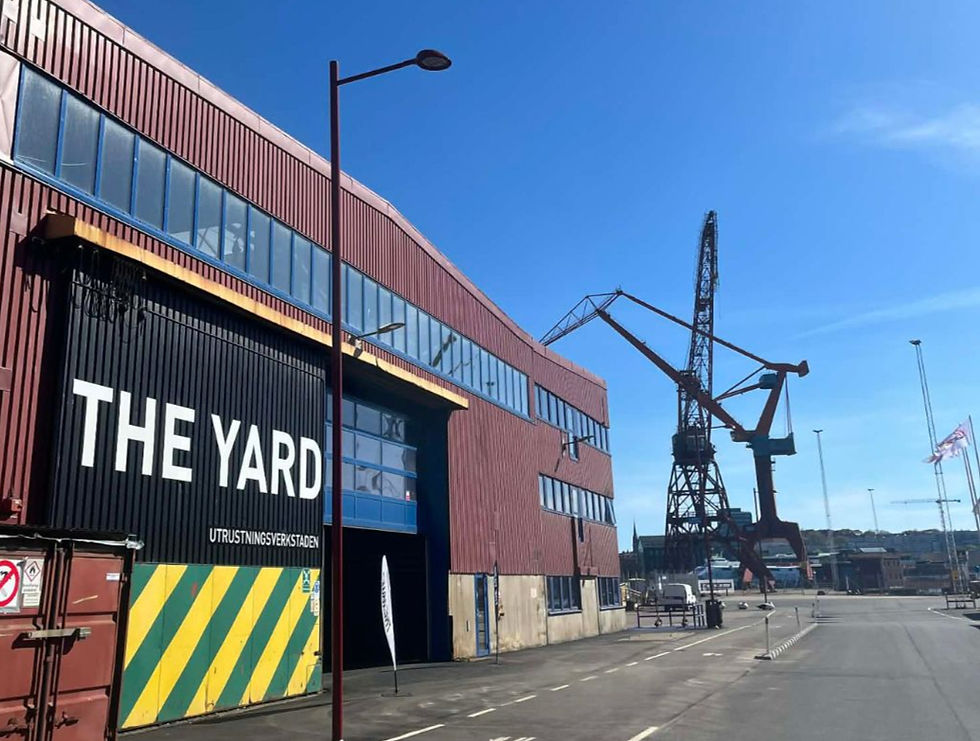
We recently attended Tales of Tech at The Yard in Gothenburg, an event that brought together discussions on AI agents, automation, and how organisations are beginning to operationalise artificial intelligence in real-world environments.
What stood out was not how fast the technology is evolving. That is already evident. The real conversation was about something else. Most organisations can build AI agents. Far fewer can actually make them deliver value in business operations.
From experimentation to real-world use
Across many industries, there is intense experimentation with AI agents. They are being used for automation, decision support, and workflow optimisation. The potential is obvious. However, there is still a clear gap between experimentation and production.
Many organisations:
build new agents
test new capabilities
demonstrate technical capability
But they often miss the most important question:
Does this actually create business value in a real operational process
This is where many AI initiatives stall. Not because the technology does not work, but because the path from prototype to production is not clearly defined.
The key insight from the event
One of the clearest insights from Tales of Tech was:
You can build AI agents endlessly, but if they are never used in real workflows, they remain potential rather than impact.
This reflects a broader shift in enterprise AI:
from building models to integrating systems
from experimentation to operational use
from hype to real value delivery
AI agents are no longer just technical projects. They are becoming part of enterprise infrastructure.
Why AI agents do not scale in organisations
From a CTO, CIO and CISO perspective, the challenges are rarely about whether the technology works. The real issue lies in scalability and execution. Common barriers include:
Unclear ownership
AI agents are often built within technical teams without clear alignment to business operations. The result is solutions that work technically but are not used in day to day work.
Lack of integration
A functioning agent is not enough. Without integration into systems and business processes, usage remains limited and fragmented.
Late governance and oversight
Security, compliance and risk management are often introduced too late in the process. At that stage, scaling becomes significantly more difficult.
Frameworks such as the NIST AI Risk Management Framework show that governance must be embedded from the beginning, not added afterwards.
The missing component is AI governance
As AI agents become more autonomous, governance becomes increasingly critical.
From a CISO and compliance perspective, the question shifts from what does it do to what happens when it acts on its own.
This includes:
risk of data leakage
prompt injection attacks
unintended decisions
lack of traceability and control
Organisations such as ENISA have highlighted that AI is both an enabler and a new attack surface, especially as autonomy increases.
Without governance, organisations scale not only capability, but also risk.
What CIOs and CTOs need to focus on
The shift for technical leaders is becoming increasingly clear. AI success is no longer about building models. It is about operationalising systems.
This requires focus on:
integration into business processes
measurable outcomes
lifecycle management of agents
collaboration between technology and business
continuous improvement
Research from Gartner shows that many AI initiatives fail not because of model performance, but because they never become fully operationalised.
From hype to real value
A recurring pattern in early AI adoption is building for demonstration rather than real utility. This leads to:
more agents
more features
more complexity
But not necessarily more value. The shift happening now is the opposite. Build less for hype. Build more for utility.
This does not mean innovation slows down. It means it becomes more focused.
Who is using this
When is it used
What problem does it solve
How is it governed
How is value measured
The role of AI agents in the enterprise landscape
AI agents will increasingly become part of:
operational workflows
decision support systems
customer processes
internal automation layers
But success will not be defined by how advanced they are. It will be defined by how well they are embedded in the organisation. The organisations that succeed will not be those with the most or the most advanced agents. They will be those that can clearly answer: How does this agent actually create value in our organisation, in a safe and controlled way
FAQ
What are AI agents in business?
AI agents are systems that can perform tasks or make decisions based on goals and inputs, often with a degree of autonomy.
Why do AI projects fail?
Most fail not because of technology, but because of poor integration, unclear ownership and weak governance.
What is AI governance?
AI governance refers to the rules, controls and frameworks that ensure AI systems are safe, compliant and properly managed.
How do companies create value with AI agents?
By integrating them into real processes, defining clear objectives and ensuring continuous monitoring and improvement.

Author
Ida Dahlgren - Growth & Marketing Associate
ida.dahlgren@cyberinstincts.com
Contact me if you want to know more!